

Rip’s Newsletter
October 9, 2026
Compiled and Edited
by
Jim Reynolds

Articles in This Issue
Micheal S Parkhurst - We Did Too Good a Job
Allan J Feifer - So Goes Europe
Pierre Rehov - Putin Talks Peace. His Missiles Say Otherwise
Jim Reynolds - Secretary of State Marco Rubio Remarks
Overview
I see the same hard truth running through this set: civilizations don’t collapse all at once, they rot from the inside while pretending they’re still strong.
Europe’s decline, America’s amnesia about communism, and Putin’s fake peace talk all point to the same problem—leaders and elites keep selling weakness as sophistication.
Rubio’s remarks at the Acropolis cut against that drift by naming the source of Western strength instead of apologizing for it.
What matters here is simple: if we forget what built us and what destroyed others, we will hand the future to people who know exactly how to exploit that weakness.
We Did Too Good a Job
By: Micheal S Parkhurst American Thinker
Date: 2026-10-09 · Words: 1,200
The author argues communism’s defeat erased public memory of its dangers.
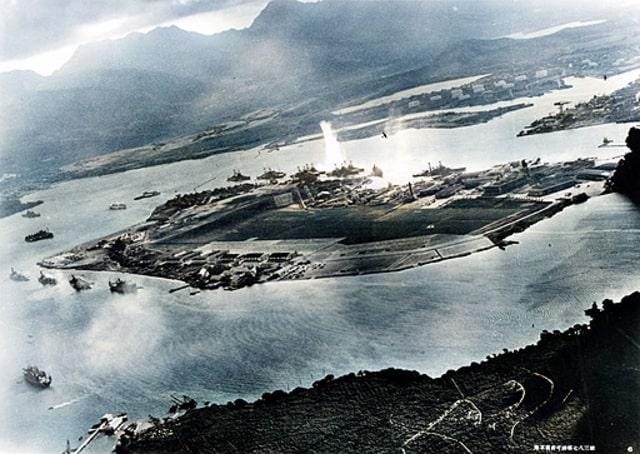
His grandfather’s Navy service symbolizes a generation that confronted communism firsthand.
Marxist theory, Leninist revolution, and Soviet collapse are framed as economic failures.
Hitler’s invasion prolonged communism by enabling Soviet expansion across Eastern Europe.
Modern American socialism grows because voters no longer remember totalitarian costs.
This story shows how historical victory can breed dangerous political amnesia and renewed socialist appeal.
🅱️ A heavy-hitting eulogy for a sense of purpose we traded for comfort. It connects the dots between grandfather’s smoke and today’s hollow politics, proving that when you kill a monster, you forget why you needed the sword.
You may need to navigate around a few popups. You can handle it. It is worth it.
Read the full original article here


So Goes Europe
By: Allan J Feifer American Thinker
Date: 2026-10-09 · Words: 1,109
Britain’s decline is framed as a warning for America, whose institutions and culture descend from Britain.
Thatcher and the Falklands briefly restored British confidence, but deeper institutional decline continued.
Europe’s welfare burdens and loss of civic confidence have eroded state capacity and national purpose.
Large-scale immigration, especially in France, has intensified demographic change, assimilation failure, and social friction.
The article warns America that Europe’s civilizational decline could eventually weaken the West and the United States.
This story shows Europe’s decline as a civilizational warning for America, linking immigration, state weakness, and lost confidence.
🅱️ A sober look at the inheritance we’re squandering. It moves from historical lineage to a modern warning without losing the thread, serving as a cold reminder that you can’t outsource stability to an ocean.
You may need to navigate around a few popups. You can handle it. It is worth it.
Read the full original article here
Putin Talks Peace. His Missiles Say Otherwise
By: Pierre Rehov The Gatestone Institute
Date: 2026-10-09 · Words: 1,437
Putin frames peace talks as conditional while Russia intensifies attacks on Ukraine.
Recent strikes hit energy infrastructure, bridges, and cities, killing civilians and worsening winter pressure.
The article argues negotiations mainly buy Moscow time, leverage, and diplomatic cover.
Past agreements like Budapest and Minsk are cited as warnings against trusting Kremlin promises.
Sanctions relief and commercial deals should follow verified de-escalation, not precede it.
This story shows Putin’s peace rhetoric masking a war strategy built on delay, coercion, and escalation.
🅱️ A sober reality check for those who think a handshake in a palace means the guns are being put down. It lays out the pattern of ‘diplomacy as a delay tactic’ with surgical precision. Useful for anyone trying to separate political theater from actual battlefield reality.
Read the full original article here
Secretary of State Marco Rubio Remarks
By: Jim Reynolds www.reynolds.com
Date: 2026-10-09 · Words: 5,009
Clean Substack. No popups or other cruft to antagonize you.
Read the full Rubio speech here
Or read the discussion right here. 🔽
Discussion
Rubio is attempting something considerably larger here than an ordinary foreign-policy speech. He is offering a theory of Western civilization.
The argument begins with ancient Greece, moves through Rome and Christendom, crosses the Atlantic to the American founding and the frontier, and finally arrives at the geopolitical problems facing the United States and Europe today. The connecting thread is character.
Civilizations do not become great merely because they possess good constitutions, abundant resources, advanced technology, or powerful armies. Those things grow out of deeper habits: curiosity, ambition, competition, courage, confidence, duty. Let those habits weaken for long enough and the institutions built on top of them eventually weaken too.
That is the argument beneath the policy.
Build Upward
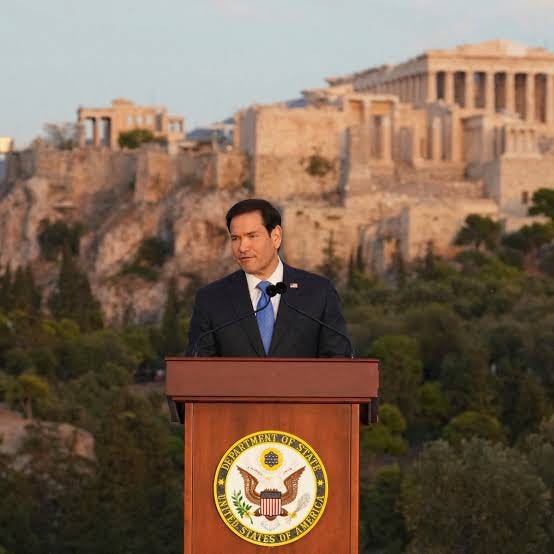
The Parthenon gives Rubio his governing image.
The Persians destroyed the Acropolis. The Athenians returned to the ruins, and eventually they built something greater. Rubio’s phrase is “build upwards,” and he means it both literally and metaphorically.
The Greeks pursued excellence in architecture, sculpture, philosophy, athletics, politics, and war. Much of civic life revolved around competition and distinction. Exceptional people were expected to attempt exceptional things, and success was something to admire rather than explain away.
Set against that is a modern instinct to protect people from failure, defeat, risk, and unequal outcomes. The problem is not simply that standards may slip. Institutions can become so preoccupied with making sure no one loses that they stop asking what the best might achieve.
Rubio’s line is memorable: “Too often these days, we build downwards.”
A society can organize itself around raising people toward demanding standards, or it can keep lowering standards until fewer people fail. Rubio thinks the West has too often chosen the second course. Once exceptional achievement becomes vaguely embarrassing, a culture begins changing what it rewards.
His answer is simple enough: admire achievement again, expect more of people, and build upward.
The Missing Ingredient: Thumos
Then comes an old Greek word: thumos.
Rubio describes it as the fire of passion, courage, strength, and pride. The word is hard to translate precisely because it combines qualities we tend to separate. It is ambition with spirit behind it, the urge not merely to get by but to do something worthy of recognition.
This leads him into the question of confidence.
A civilization embarrassed by its own accomplishments may eventually become reluctant to defend them. A nation taught mainly to regard its history as a catalogue of offenses may have trouble explaining why its institutions are worth preserving.
From there, Rubio connects cultural confidence to borders, industry, military power, sovereignty, and international institutions. Each policy can be argued separately. But the underlying point is plain enough: countries act differently depending on what they believe about themselves.
A confident civilization behaves differently from an apologetic one.
From Curiosity to Apollo 11
One of the strongest parts of the speech is Rubio’s treatment of Western curiosity.
The Greeks did not merely encounter mysteries. They assumed mysteries could be solved. The world could be observed, measured, mapped, and understood.
From that impulse Rubio draws a long historical line: Greek philosophy, mathematics, medicine, natural law, exploration, astronomy, engineering. Then Copernicus, Galileo, Kepler, Newton. Then Magellan and Columbus. Finally Apollo 11.
The episodes are separated by vast differences in time and circumstance, but Rubio is after the recurring impulse beneath them: go farther, find out, figure out what has not yet been understood.
That is also why the American frontier fits so naturally into the speech. He treats the United States not as a departure from Western civilization but as one of its most energetic expressions. The Greek horizon becomes the American frontier; the explorer eventually becomes the astronaut; a civilization that once looked across the Mediterranean finally looks toward the moon.
Different centuries, same impulse.
There Is Nothing Wrong With Wanting to Win
Rubio also uses a word modern diplomacy often avoids: win.
“We want to win together. We must win together.”
That line marks another break with the usual diplomatic vocabulary. Rubio does not pretend international competition can somehow be wished away. Nations have interests, and they compete for territory, technology, resources, energy, markets, military advantage, and influence.
Pretending otherwise does not end the competition. It only changes who competes effectively.
That is where the Trump administration’s agenda enters the speech: reindustrialization, energy production, critical supply chains, defense manufacturing, artificial intelligence, semiconductors, minerals, cyber capability, space, military strength.
Usually these are discussed as separate policy areas. Rubio gathers them under one heading: national power.
He does not treat power as sufficient by itself. Prudence and diplomacy remain part of statecraft. But diplomacy without credible force behind it has limits, and Rubio believes the ancient Greeks understood that clearly.
Nationalism Without Isolation
The speech also pushes back against the idea that nationalism and international cooperation must be opposites.
Rubio is not calling for withdrawal from alliances. He is arguing for cooperation among nations still confident enough to remain nations. NATO, in this view, does not exist to dissolve sovereignty. It exists to defend it.
That changes the way the transatlantic alliance is understood. Its strength comes from sovereign countries recognizing common interests and deciding that they can accomplish more together than apart. Cooperation does not require identity to disappear first.
This also helps explain Rubio’s treatment of Western history. His case does not depend on pretending the West committed no crimes or made no mistakes. Obviously it did. The Greeks fought one another relentlessly. Rome could be brutal. European history contains war, conquest, slavery, imperialism, and atrocities.
But those failures do not erase the inheritance.
The West also produced constitutional government, scientific inquiry, modern medicine, representative institutions, extraordinary art and architecture, technological revolutions, and enormous material prosperity. Rubio wants Western societies to be able to say that without embarrassment.
Historical maturity does not require historical self-loathing. A civilization can know its sins and still regard itself as worth preserving.
Something Larger Than Yourself
Up to this point, the speech has celebrated ambition, competition, exploration, greatness, and victory. Then Rubio introduces duty.
Socrates accepts death rather than abandon his pursuit of truth. The Spartans remain at Thermopylae. Achilles chooses glory over a long and peaceful life. Christian martyrs refuse to betray their faith. Thomas More follows conscience to the scaffold. American revolutionaries pledge their lives, fortunes, and sacred honor.
The examples are different, but the thread is loyalty to something larger than oneself.
That supplies the moral limit on ambition. Greatness is not merely becoming powerful. It is putting strength in the service of something worthy: country, faith, truth, family, duty, honor.
Rubio then separates sacrifice from what he calls a “cult of death.” Western heroes may be willing to die, but death is not the objective. Life is valuable. That is precisely why giving it up can become heroic.
The soldier who dies defending others does not show that life is worthless. He shows that some obligations can outweigh even his own survival.
A society unable to imagine anything worth such sacrifice may eventually have trouble identifying anything worth defending.
Born in Athens
The speech reaches its rhetorical high point in Rubio’s description of the Western inheritance: born in Athens, formed by Rome, baptized in Christendom, hardened in medieval Europe, endowed with the English genius for liberty, carried across the Atlantic, and reborn in America.
That is his civilizational genealogy.
No compressed account of three thousand years can carry every complication, and Rubio is not writing a textbook. He is drawing a line of inheritance.
America, in that story, is more than a large country negotiating with other large countries. It is a present custodian of something much older than itself. Europe is where much of that inheritance took shape. Greece is where Rubio chooses to begin the story.
That is why Athens is not just scenery.
It is the argument.
The Parthenon Still Stands
Rubio begins with ruins, but he does not end with them.
Civilizations decline. Institutions weaken. Industries disappear. Military power erodes. Borders fail. Confidence vanishes.
None of it has to be permanent.
The Athenians returned and built again. Twenty-five centuries later, the Parthenon still stands.
Rubio’s message to America and Europe is therefore not primarily nostalgic. It is restorative. Recover confidence. Reward excellence. Build things. Explore. Compete. Defend your country. Keep your word. Honor those who sacrifice. Remember what you inherited, then add something worthy to it.
The ruins behind Rubio in Athens represent the past.
The speech is about what comes next.
Read the full original article here
You may also be interested in the following selected stories:
Marco’s apology — Scott Johnson, Power Line
Blue States Are Redefining Religious Freedom — Andrea Picciotti-Bayer, The Federalist
Why We’re Suing the L.A. Metro — Christopher F Rufo; Haley Strack, christopherrufo.com
Why Tariffs on China Protect Capitalism — Gregory Lyakhov Contributor, The Patriot Post
The Media Miss The Point Of Vance’s H-1B Crackdown — Chris Bray, The Federalist
The Belated Execution of Major Hasan — Don Brown, American Thinker

1. Recognize the indoctrination. Identify where instruction crosses the line from presenting ideas to requiring students to accept them. Look for suppressed alternatives, loaded questions, ideological assumptions presented as facts, and penalties for disagreement.
2. Interrupt the indoctrination. Restore intellectual competition in the classroom. Require teachers to distinguish facts from interpretations, present serious competing arguments, and allow students to challenge conclusions without fear of punishment.
3. Teach HOW to think. This is the lasting solution. Teach logic, evidence, causal reasoning, the scientific method, and the difference between an assertion and a demonstrated fact. Give students the tools to recognize manipulation, including manipulation by people whose conclusions they happen to favor.
Todays teachers are reluctant to focus on the Stalin Years. In hopes those atrocities via communism will and now are fading for todays youth! Planned Obsolence. Makes it very easy for Leftist to convince the unread/ignorance to fall victim! Well diguised treason?