
Rip’s Newsletter
October 28, 2026
DEEP RIP EDITION
Compiled and Edited
by
Jim Reynolds

You Choose How Deep to Go
We’re building the best reader experience in the business for thoughtful, conservative-minded subscribers. Not the biggest. The best.
Our political leanings are generally conservative, but Rip is not a political cheerleading newsletter. We’re interested in ideas, not slogans. We seek out the best writers, the most compelling arguments, and the articles that make you stop and think about what’s happening in America and the world.
You won’t necessarily agree with everything we publish. We don’t expect you to. That’s part of the point.
We respect your intelligence. And your time.
That’s why every issue now offers three ways in, and none of them is the “right” one.
Just the story? Hit View Article. One click and you’re at the publisher.
Just the gist? The summary and takeaway are there. Deep Rip readers also get the Discussion. Read as much as you like, then decide.
The whole thing? Summary, article, then the Discussion. The buttons sit between the two on purpose, so leaving doesn’t cost you your place.
Two new things in Deep Rip.
Original article images. Rip was moving the newsletter toward more images — a little more “pop.” Deep Rip carries that forward: where a usable one exists, we pull a selected image from the source and give you a visual sense of the story.
Text Preview. About 300 words of the original article in a clean, text-only format. No ads. No clutter. No pop-ups. Just the author’s words, with a link to the complete article when you’re ready for more. This one is a big deal.
Same commitment to great writing. More ways to discover it, explore it, and enjoy it.
Look around. We believe no other publication offers you the selection, flexibility, and power of Rip’s Newsletter.
Every day, we strive to create a shared experience that would make my friend, Rip McIntosh, proud.
— Jim

Articles in This Issue
Victor Davis Hanson - The Ukrainian Gordian Knot
Felix Miller - National First Responders Day and the People Who Saved My Son
Pierre Rehov - Who Verifies Artificial Intelligence? When AI Learns Jew-Hate
Jay Rogers - Coming Attractions: Europe’s Trailer for America
Christopher F Rufo; Madeleine Rowley - California Sends Luxury Foods to Welfare Recipients

The Ukrainian Gordian Knot
By: Victor Davis Hanson American Greatness
Date: 2026-10-27 · Words: 1,863
Hanson likens Ukraine to a Gordian knot: solvable only by dangerous force in a nuclear age.
He says the war has lasted nearly five years, with massive casualties and no clear end.
Russia’s failed blitzkrieg became a grinding slaughterhouse, while Ukraine strains for men, money, and aid.
The conflict is fracturing the West, exposing U.S.-Europe rifts over Russia, Iran, and sanctions.
Hanson sees only grim outcomes, from armistice to collapse, and urges ending the war soon.
This story shows a brutal stalemate war destabilizing Ukraine, dividing the West, and narrowing peace options.
Skip the discussion — the article, or a short preview first:
Discussion
The article’s strongest move is the way it keeps returning from grand strategy to arithmetic: population, GDP, casualties, fuel, aid, border depth. That accumulation does more than make the war sound large; it turns the conflict into a contest of reserves, where time itself becomes a weapon and a liability. The “Gordian knot” frame matters because it sets up a false comfort—one decisive cut—and then denies it. In a nuclear age, the old heroic solution becomes the dangerous one, so the piece keeps circling the same grim fact from different angles: neither side can easily win, but both can still make the other bleed.
That logic also explains the article’s most revealing tension. It treats the war as a European battlefield, yet the real subject is the strain it places on the wider West: U.S.-Europe friction, Iran, China, energy policy, migration, elections, sanctions. Ukraine is not isolated in the argument; it is the point where several Western crises touch. That is why the piece can move from Donetsk to French unrest to NATO basing rights without feeling like a digression. The war becomes a stress test for alliance coherence, and the unsettling implication is that even a frozen front would not restore stability. It would only pause one catastrophe inside a larger, already-fraying order.
🅱️ This is the ugly math of modern war: nobody gets a clean win, everybody pays, and the bill keeps wandering west.

National First Responders Day and the People Who Saved My Son
By: Felix Miller The Daily Signal
Date: 2026-10-28 · Words: 1,338
National First Responders Day became personal when the author’s son was struck by a car in Washington, D.C.
Police, paramedics, and a hospital trauma team saved him through rapid local coordination.
The experience reinforced a FEMA lesson: real readiness depends on functioning people, not paper plans.
First responder systems face burnout, staffing shortages, volunteer decline, and mental health barriers.
Local leaders must sustain readiness through staffing, training, accountability, and community support.
This story shows how local first responders, not Washington, deliver lifesaving readiness when families suddenly need help.
Skip the discussion — the article, or a short preview first:
Discussion
The piece’s center of gravity is not the crash itself but the chain of ordinary competence that followed it: a police officer who recognizes the name, a paramedic who can say the patient was still alive, a trauma team already in motion. That sequence matters because it turns “readiness” from a slogan into a visible system of handoffs. The author has spent years inside FEMA and CISA, so the article keeps returning to the difference between exercises and reality, but the son’s accident gives that distinction a human scale. What had been an institutional lesson becomes a family fact.
That is also why the article keeps narrowing the frame from Washington to the block, the shift, the department, the county commissioner. The capital is present only as a setting; the actual capacity sits with local people and local institutions. Even the federal role is recast as indirect: grants, plans, corrective actions, paperwork. The telling detail is that the improvement plan can be complete while the capability is gone, because the truck, the dispatcher, or the trained operator may no longer be there. Read that way, the article is less about funding in the abstract than about continuity — whether a community can still produce the same response six months or six years later, after the original people have burned out, retired, or moved on.
The final turn to mental health fits that same logic. It is not a separate concern appended at the end; it is part of the same readiness problem. A department that cannot keep people healthy, confidentially, and long enough to stay on the job is not merely understaffed. It is losing the very experience that makes the next emergency survivable.
🅱️ Readiness isn’t a binder on a shelf; it’s the tired people who still show up, and when they don’t, the paperwork won’t carry the stretcher.

Who Verifies Artificial Intelligence? When AI Learns Jew-Hate
By: Pierre Rehov The Gatestone Institute
Date: 2026-10-28 · Words: 1,533
AI chatbots are replacing traditional knowledge sources for students, professionals, and public institutions.
ADL testing found measurable anti-Jewish and anti-Israel bias across four leading large language models.
LLMs absorb vast, unvetted internet data, including propaganda, repetition, and historical falsehoods.
Wikipedia manipulation and platform disinformation risk embedding distorted Jewish and Holocaust narratives into AI.
The article calls for independent audits, warning AI could amplify antisemitism and erode democratic truth.
This story shows how AI can industrialize antisemitic falsehoods unless independent verification becomes routine.
Skip the discussion — the article, or a short preview first:
Discussion
The article’s sharpest move is the contrast between how the models answer a 9/11 conspiracy question and how they answer the same accusation when Jews are named. That small test does a lot of work: it turns a vague worry about “bias” into something almost laboratory-like, where the machine’s hesitation becomes the evidence. The point is not just that the systems can be wrong, but that they appear to have inherited a hierarchy of suspicion — one lie is treated as absurd on contact, another as discussable. That difference matters because it suggests the problem is not random error but patterned contamination.
From there the piece builds a chain that is less about one bad chatbot than about the whole supply line of modern knowledge. The argument keeps moving backward: from the model, to the web, to Wikipedia, to coordinated editing, to the broader ecosystem of propaganda and repetition. That structure is revealing because it treats AI not as an isolated technical failure but as the last stage of a much older information war. The machine’s weakness is that it cannot tell the difference between accumulated falsehood and accumulated truth; it only knows volume, recurrence, and statistical weight. In that sense, the article is really about what happens when a culture lets quantity stand in for verification.
The Holocaust material gives the argument its most unsettling edge. The article is not merely saying that denial exists online; it is showing how a generation that already lacks basic historical knowledge may now meet that ignorance through a fluent, authoritative interface. That combination — weak memory on the human side, confident synthesis on the machine side — is what makes the danger feel larger than ordinary misinformation. The concern is not just that falsehood spreads faster, but that it arrives in a form that feels settled, neutral, and already checked.
🅱️ When the machine sounds certain, the old trick is still the same: dress up a pile of junk as common sense and let the next generation inherit the bill.
Coming Attractions: Europe’s Trailer for America
By: Jay Rogers American Greatness
Date: 2026-10-28 · Words: 1,210
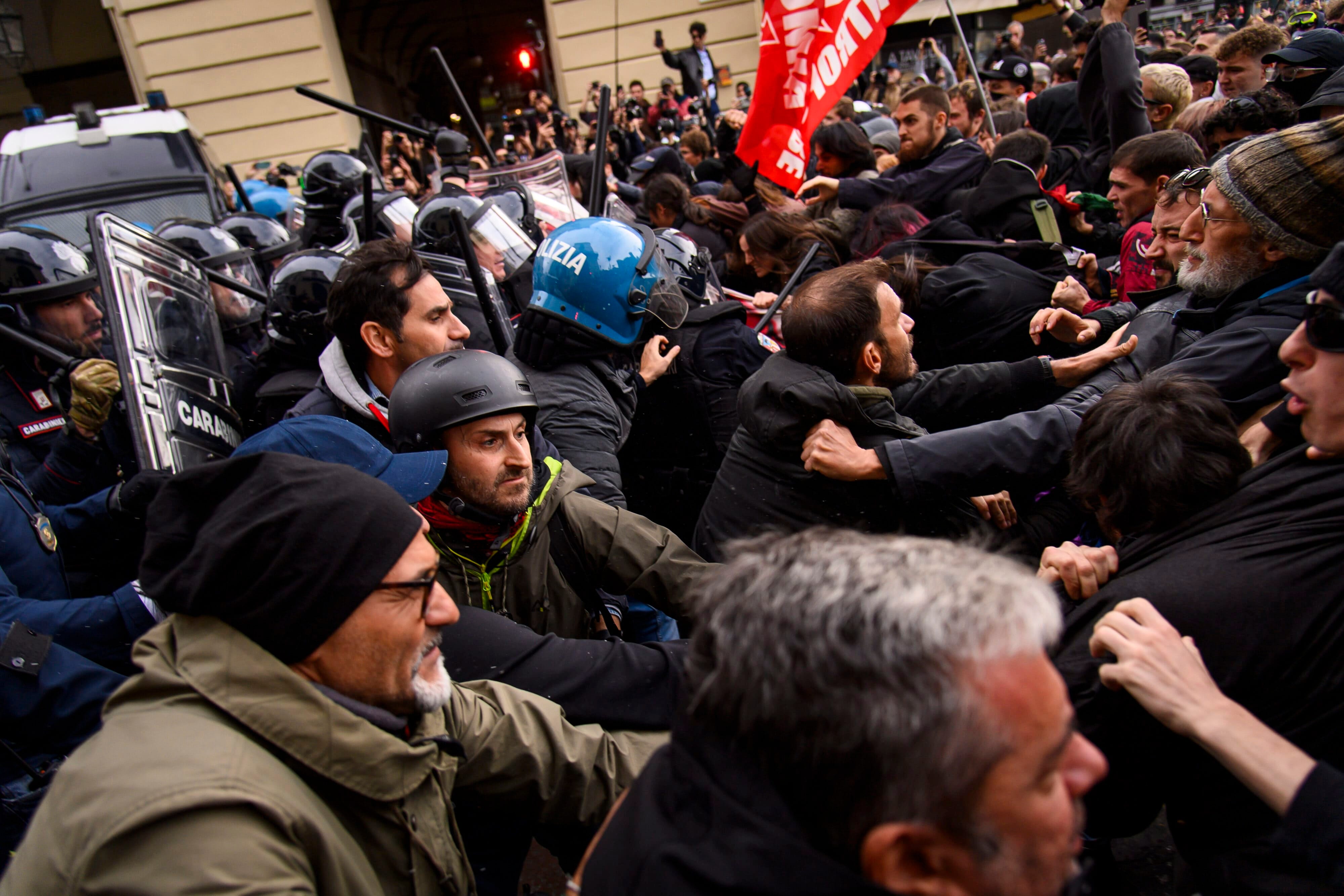
France’s riots left thousands arrested, hundreds injured, and police admitting lost control.
The author says the unrest reflects broader European disorder, not one migration-linked cause.
He argues Europe’s data show weak assimilation, lower employment, and higher crime among non-EU arrivals.
Deportation enforcement remains poor, while welfare use and fiscal strain burden host countries.
America should enforce removals, demand self-sufficiency, and publish immigration-linked crime and welfare data.
This story shows Europe’s unrest as a warning about immigration, assimilation, and rule enforcement for America.
Skip the discussion — the article, or a short preview first:
Discussion
The piece keeps returning to the same distinction: spectacle versus structure. The burning city hall, the mass arrests, the injured police, the campaign-ready footage from Budapest and Warsaw — all of that is treated as politically potent but analytically slippery. The article’s real move is to separate the riot as image from the riot as evidence, then insist that the stronger case lies in the slower-moving numbers on work, crime, removals, and welfare. That gives the argument a particular shape: the flames are not the proof, they are the prompt.
What becomes visible in the statistics is less a single immigration story than a system that tolerates mismatch and then normalizes it. The employment gap matters because it turns assimilation into a fiscal question, not just a cultural one. The crime figures matter because they are handled carefully — suspects in Germany, convictions in Denmark, age-adjusted comparisons — which makes the pattern feel more durable than a one-off headline. And the return-rate data is especially revealing because it shows how enforcement can exist in law while failing in practice. A country can order departures and still function as if departure is optional.
The article’s strongest internal tension is that it repeatedly warns against overreading the riots themselves, then uses them as a preview of what happens when the underlying numbers are ignored. That is not a contradiction so much as a hierarchy: the riots are the trailer, the data are the plot. The American turn at the end follows naturally from that structure. The point is not that Europe and America are identical, but that Europe supplies a visible version of what happens when rules are written more confidently than they are enforced.
🅱️ The fire is just the headline; the bill comes later, in jobs, courts, and welfare offices.
California Sends Luxury Foods to Welfare Recipients
By: Christopher F Rufo; Madeleine Rowley christopherrufo.com
Date: 2026-10-28 · Words: 1,215
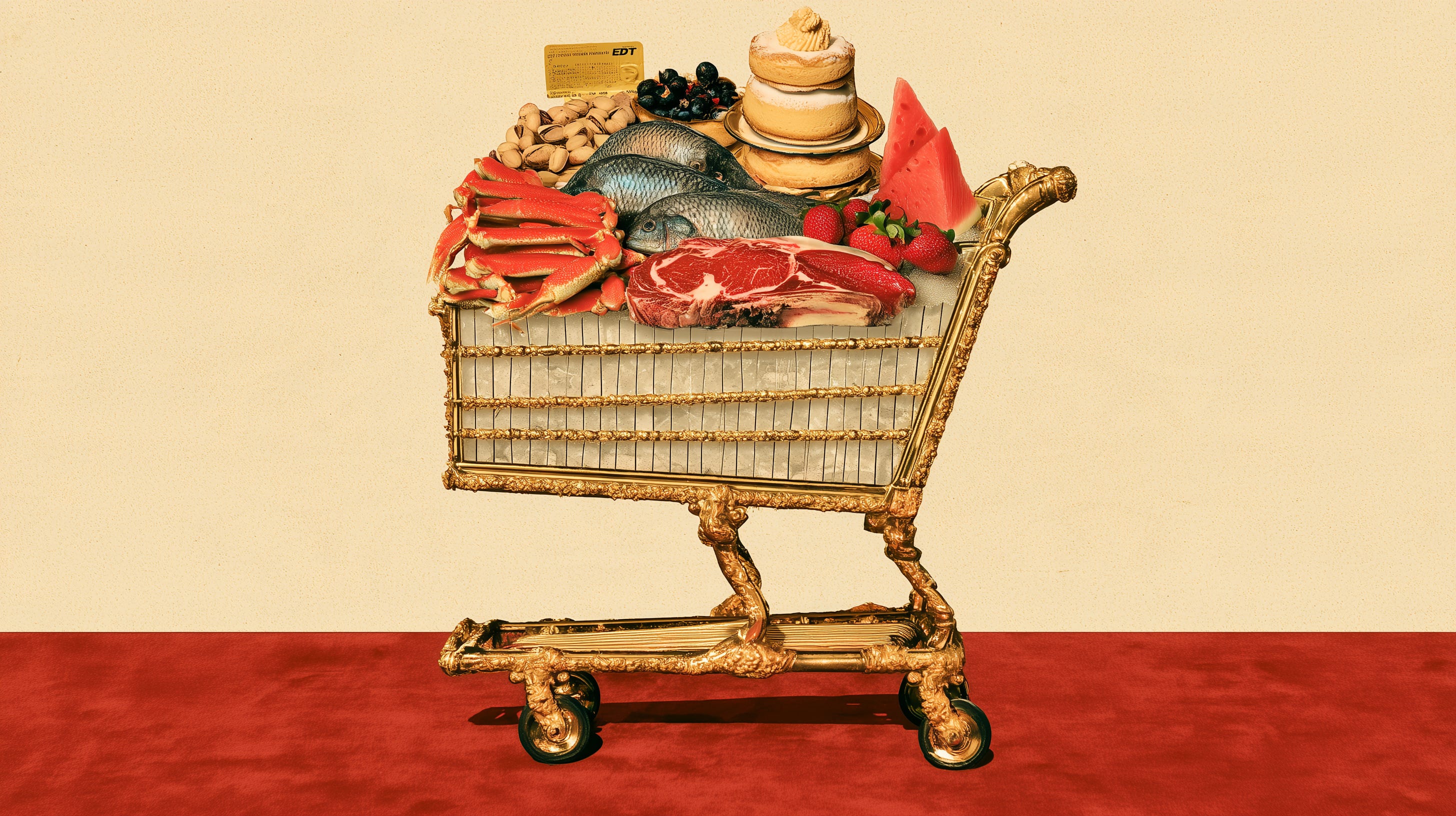
California’s Medi-Cal reform now funds home-delivered luxury groceries and meals.
Eligible recipients can receive salmon, beef, organic produce, and Amy’s meals.
Enrollment is easy; chronic conditions and a provider recommendation often suffice.
Taxpayers pay over $1,500 per recipient across 24 weeks of deliveries.
Critics say the program duplicates food aid and can include illegal immigrants.
This story shows California is using Medicaid dollars to deliver costly gourmet food benefits to welfare recipients.
Skip the discussion — the article, or a short preview first:
Discussion
The little scene with the grocery box does a lot of work. It turns a policy debate into something tactile: lettuce, broccoli, rice, a box opened on camera, a recipient speaking in the language of ordinary household scarcity. That matters because the program is not presented as an abstract reimbursement scheme but as a visible transfer of goods, and the goods themselves are ordinary enough to feel familiar while still being framed as a premium benefit. The article keeps returning to that contrast — what a middle-class shopper would pay for, what a welfare recipient receives at the doorstep, and what the state is willing to classify as medicine.
The eligibility rules sharpen that picture. A program that sounds specialized and clinical is shown to be broad in practice, with chronic conditions ranging from diabetes to anxiety, PTSD, depression, and ADHD. That list does more than widen the pool; it blurs the line between medical necessity and social policy. Once the state can route food through a health designation, the program becomes easier to expand, easier to re-enroll in, and harder to distinguish from another layer of welfare. The article’s strongest implication is not just that California is buying expensive meals, but that it has built a mechanism that can convert a wide range of need into a reimbursable food entitlement.
The immigration point fits into that same structure. It is not merely an add-on outrage; it shows how a benefit designed through health coverage can travel with the coverage itself, even when the recipient’s legal status would ordinarily be politically salient. And the business side is just as revealing: the article is not only about recipients, but about a growing vendor class that has learned how to bill Medicaid for “meals” and “community supports.” That makes the program look less like a one-off experiment than a durable market, with California as both the largest customer and the proof of concept.
🅱️ California didn’t just make groceries a benefit; it turned a box of salmon and broccoli into a billable medical event, which is either policy innovation or the kind of paperwork that eats the republic.
You may also be interested in the following selected stories:
Democrat-Aligned Groups Threaten To Undermine Democracy — Sofia Karstens, The Federalist: Recordings and public reports show Democrat-aligned activists and officials discussing contingency plans for a disputed 2026 or 2028 election, including “red lines,” emergency coordination, and possible structural reforms. It examines how those plans compare with the standards Democrats applied after Jan. 6.
Beijing’s Open Door: How the West Let China In and Paid for It — Lipton Matthews, American Greatness: An account of how Chinese influence has shaped British universities and activism, from scholars pressured over China research to allegations of Beijing-linked funding behind protest groups. It shows the channels through which academic freedom and public debate can be affected.
The Essex Files: When Excellence Becomes an Offense — Brad Essex, RedState: A Florida youth soccer league called police after parents complained that a 3-year-old was dominating older kids, then removed him from play. The report examines the dispute and argues that youth sports should handle exceptional talent by raising competition, not sidelining it.
How You Can Fight Judicial Activism — Felix Miller, The Daily Signal: An argument for fighting judicial activism through state and local judicial elections, especially by putting party affiliation on contested judicial ballots. It explains why the author thinks more voter information could make courts more transparent and how citizens can push the reform.
Media Bias, in Real Time — Jack DeVine Contributor, The Patriot Post: A Washington Post report about unnamed officials warning states of possible Trump election interference is examined as an example of media bias, with the essay arguing the story recycles old partisan claims and offers little new evidence.