
Rip’s Newsletter
October 24, 2026
Compiled and Edited
by
Jim Reynolds

Articles in This Issue
Daniel Greenfield - “I’ve Got Too Old To Not Be Greedy”: VA Senate President Indicted for Drug Trafficking
Jay Rogers - Europe’s Open Door Came With a Bill
Zuhdi Jasser - Muslim Group Supports Lawsuit Against Dearborn, Mich.
Jim Reynolds - When Scholarship Becomes Doctrine
Overview
Today’s set is about power getting exposed in plain sight: a Virginia political boss indicted in a drug-trafficking case, a French state that spent itself into a corner, and a Michigan city accused of favoring one faith while shutting out a Christian pastor.
I see the same rot underneath all of it—elites who think rules are for other people, and institutions too weak or too captured to stop them.
Even the piece on ethnic studies lands in the same place: when scholarship turns into doctrine, it stops teaching and starts indoctrinating.
Note:
Sorry about being a day late. We celebrated our wedding anniversary yesterday!

“I’ve Got Too Old To Not Be Greedy”: VA Senate President Indicted for Drug Trafficking
By: Daniel Greenfield FrontPage Magazine
Date: 2026-10-23 · Words: 1,062
Virginia Senate President Pro Tem Louise Lucas was indicted in a federal racketeering and drug-trafficking case.
Prosecutors allege she led a family-run “Lucas Enterprise” distributing marijuana and laundering proceeds.
The eight-count indictment includes bribery, wire fraud, firearms, and maintaining drug-involved premises.
Lucas allegedly used her Senate power to shield the operation and influence marijuana legislation.
The article frames the case as evidence of deep Democratic corruption in Virginia politics.
This story shows how a powerful Virginia Democrat is accused of using public office to run a marijuana trafficking enterprise.
Skip the discussion and go directly to the article:
Discussion
The indictment’s most striking feature is how ordinary the language of the alleged operation sounds once it is pulled out of the usual political setting. “Generational wealth” is the phrase that does the work here: it turns what might otherwise read as a familiar corruption case into something almost familial and entrepreneurial, a family business with legislative access attached. That is reinforced by the indictment’s structure, which does not present a lone official skimming off the top but a network of daughters, a grandson, associates, licensing talk, and proceeds. The result is less the image of a politician taking bribes than of public office being folded into the machinery of a private enterprise.
The other revealing detail is the repeated collision between law enforcement and political insulation. The article lingers on moments where police, prosecutors, and legislators are all in the same frame: charges filed and then dismissed, warnings from a senior law-enforcement officer, a burglary report, a claim that “the whole police department protected us.” Whether every line will hold up in court is not the point the piece is making; what matters is that the indictment, as quoted, depicts a world in which official power is not merely adjacent to the alleged trafficking but part of the operating environment. That is why the governor’s careful presumption-of-innocence statement lands as more than routine caution. It reads as a political retreat from a figure who has been central enough to the party’s machinery that even a clean break is hard to make.
🅱️ When public office starts looking like a family business with a badge on the door, the rot isn’t subtle anymore.


Europe’s Open Door Came With a Bill
By: Jay Rogers American Greatness
Date: 2026-10-22 · Words: 1,223
French school blockades and street protests have triggered thousands of arrests and injuries.
Macron concedes cost-of-living anger, but students demand school repairs, teachers, and smaller classes.
France’s debt and rising interest costs leave little fiscal room for new obligations.
Germany and Denmark show immigration strains through welfare costs, low employment, and tighter rules.
The article argues assimilation, work, language, and enforced borders determine immigration’s fiscal outcome.
This story shows Europe’s immigration model is colliding with debt, welfare strain, and assimilation failures.
Skip the discussion and go directly to the article:
Discussion
The article’s strongest move is to treat immigration less as a cultural argument than as a balance-sheet problem. That shift matters because it changes the burden of proof: once the question is framed as liabilities, cash flow, and interest expense, the familiar moral language around openness no longer settles anything. France’s debt service, Germany’s welfare rolls, and Denmark’s net fiscal calculations are not presented as isolated national quirks but as different views of the same ledger. The recurring pattern is that the costs do not arrive all at once; they accumulate through unemployment, language failure, and long benefit dependence, which is why the piece keeps returning to work and assimilation rather than to border crossings alone.
The most revealing detail is the article’s insistence that the fiscal problem is not simply “immigrants cost money,” but that the outcome depends on whether newcomers are turned into taxpayers quickly enough. That is why the OECD caveat is not brushed aside but folded in: the shortfall comes more from low employment than from unusually high spending, which means the remedy is administrative and civic, not sentimental. The piece’s examples from Denmark and Germany sharpen that point. Denmark’s numbers are used not just to show a deficit, but to show that a state can measure the deficit, tighten the rules, and reduce it. Germany’s benefit reforms and vocational-training figures serve the same function: they make assimilation look less like an abstract ideal than a set of enforceable conditions.
That is also why the article keeps pairing fiscal data with discipline language — language instruction, work requirements, school attendance, border enforcement. The argument is that Europe’s mistake was not merely admitting too many people, but admitting them into systems that treated adaptation as optional. Once that happens, the bill is not only financial. It shows up in resentment, in political backlash, and in the shrinking room governments have left to promise anything else.
🅱️ Europe didn’t just open the door; it also left the light on, the heat running, and the invoice on the table.
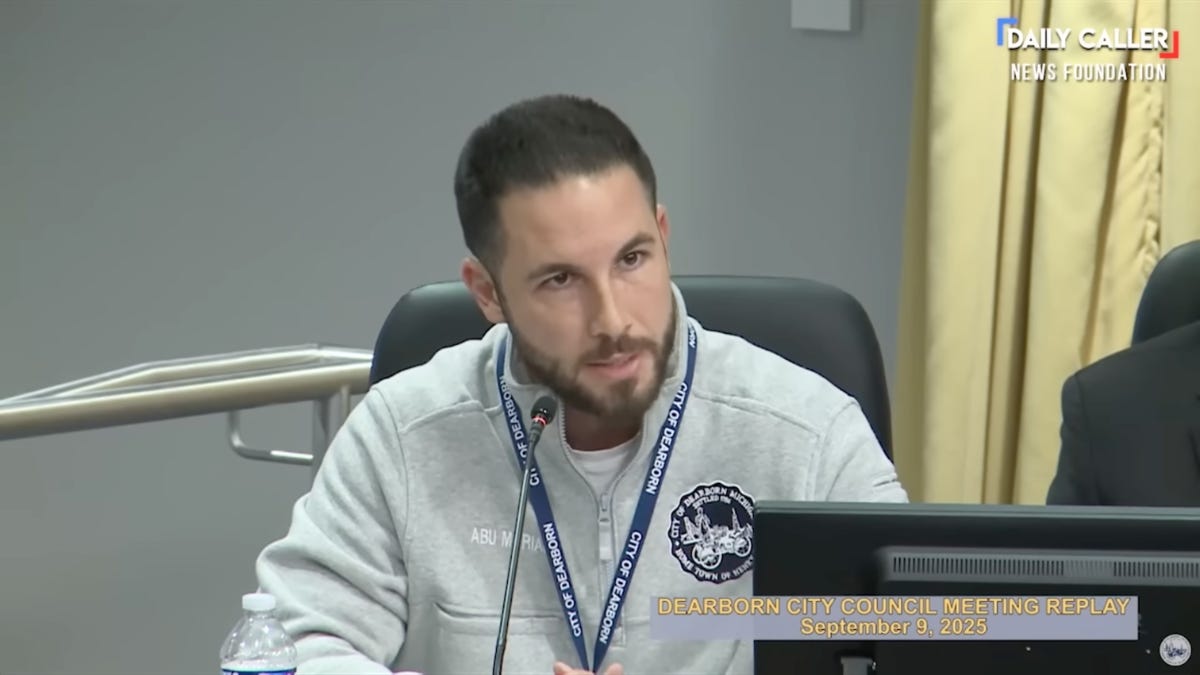
Muslim Group Supports Lawsuit Against Dearborn, Mich.
By: Zuhdi Jasser The Federalist
Date: 2026-10-23 · Words: 1,613
Dearborn Mayor Abdullah Hammoud told a Christian pastor he was “not welcome” after street-renaming objections.
Margot Cleveland’s federal lawsuit alleges Dearborn favored Islam through public Ramadan and crescent displays.
The complaint says the city ignored requests for equal Easter and Passover recognition.
The CLARITy Coalition backs the suit as a constitutional check on Islamist politics.
The article argues equal treatment protects dissenters and preserves religious freedom for all.
This story shows how a federal lawsuit over Dearborn’s religious favoritism could test equal protection and First Amendment neutrality.
Skip the discussion and go directly to the article:
Discussion
The opening exchange at the council meeting does a lot of work before the lawsuit even appears. The mayor’s “not welcome” line is not just rude; it turns a zoning dispute into a statement about civic belonging, and the article uses that moment to frame the later banner-and-lighting allegations as something more than aesthetic favoritism. Once that frame is set, the details of the complaint matter less as isolated expenditures than as a pattern of public symbolism: the city is not merely accommodating a holiday, but visibly marking which faith is being treated as native to the place.
From there the piece widens into a theory of how religious majorities behave when they gain local power. The argument is built on a sharp distinction between Islam and Islamism, and that distinction is doing double duty: it lets the author speak as a Muslim critic of theocratic politics while also making the constitutional claim feel internal to the faith rather than imposed from outside it. That is why the article keeps returning to equal treatment, not special privilege. The legal issue is presented as simple neutrality, but the deeper claim is that neutrality is not a thin procedural rule here; it is the only thing that prevents majority religion from hardening into civic hierarchy.
The Michigan examples and the later references to activist networks and campus-style radicalization broaden the case from Dearborn to a warning about a political ecosystem. That expansion is revealing because it shows the article’s real concern is not one city’s holiday displays, but the way grievance, identity, and public power can reinforce one another until religious favoritism becomes a gateway to something more coercive. Even so, the lawsuit remains the anchor. The article keeps returning to the ordinary constitutional promise that a city cannot sort its residents into welcome and unwelcome categories by faith, and that is where its strongest force lies.
🅱️ When a mayor starts handing out “welcome” like a bouncer, the lawsuit stops being about decorations and starts being about who gets to count as a neighbor.
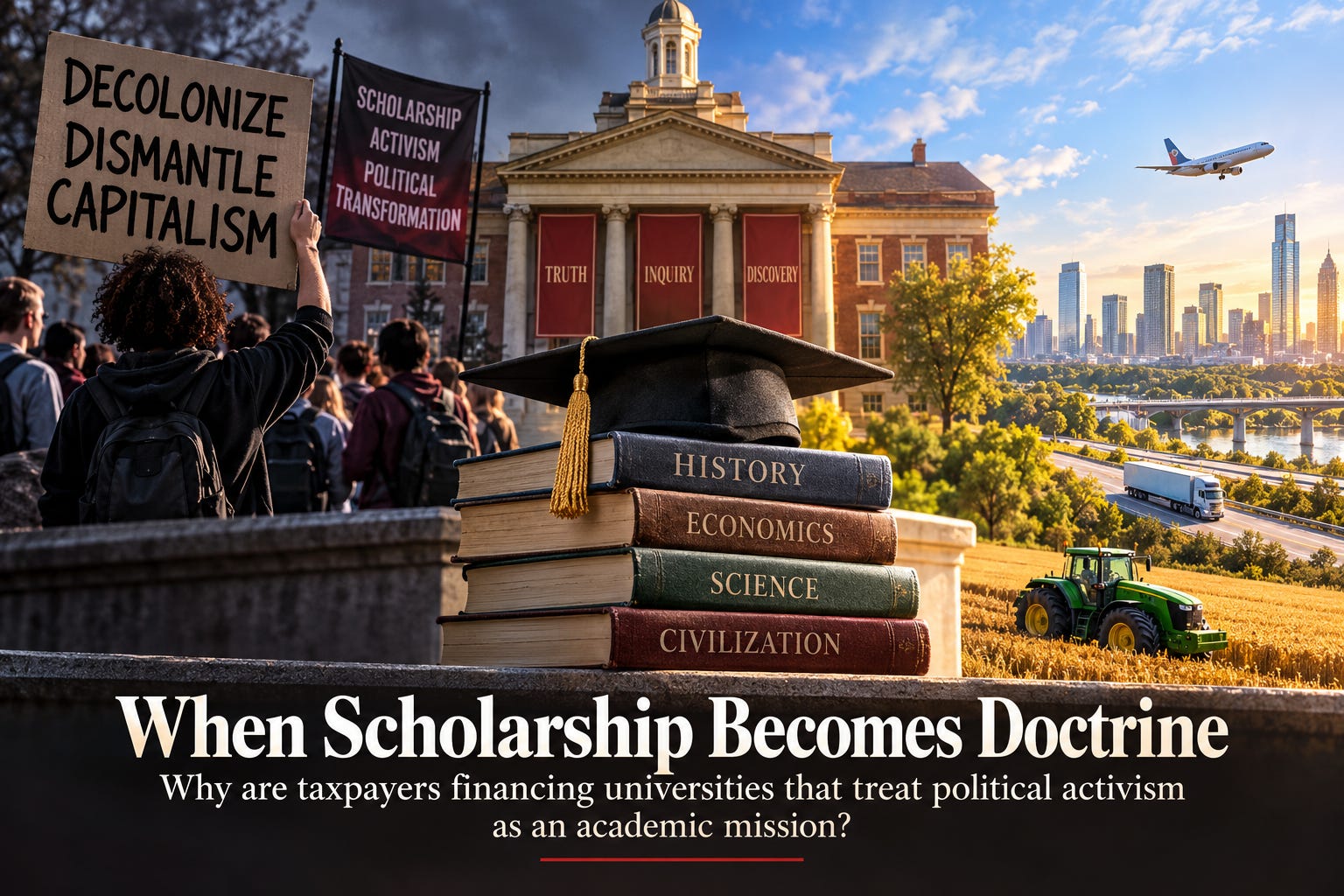
When Scholarship Becomes Doctrine
By: Jim Reynolds www.reynolds.com
Date: 2026-10-23 · Words: 2,420
CES frames ethnic studies as an “urgent political education project” with revolutionary aims.
Reynolds argues this mission sounds like predetermined activism, not open-ended scholarship.
He says history shows empires and slavery changed, complicating totalizing oppression narratives.
He defends capitalism as a productivity engine that reduced poverty and expanded living standards.
Universities, he warns, can become self-reinforcing systems when ideology outruns accountability.
This story shows how academic fields can blur into political doctrine when institutions reward predetermined conclusions.
Skip the discussion and go directly to the article:
Discussion
The phrase “urgent political education project” does a lot of work. It turns a field that might have been defended as corrective or interpretive into something closer to mobilization, and the rest of the piece keeps returning to that shift in register. The question is not whether ethnic studies can examine real injustices; it is whether the institutional language has moved from studying a subject to advancing a cause. Once that move is made, the usual academic virtues—openness, revision, the possibility of being wrong—stop sounding like the point of the enterprise and start sounding like obstacles to it.
The article’s strongest evidence is not a single scandal but the accumulation of institutional cues: revolutionary roots, activism, institution-building, journal publication, university affiliation. Taken together, they show how a political program can acquire the outward forms of scholarship without surrendering its internal commitments. That is why the discussion of capitalism and history matters. It is not just a defense of markets or a reminder that slavery ended; it is an attempt to show that a totalizing framework can become misleading when it treats historical injustice as if it were the permanent operating system of modern life. The counterweight is change—political, economic, and institutional change—and the piece keeps insisting that any serious account has to leave room for it.
🅱️ When the mission is “urgent political education,” the lab coat starts looking a lot like a uniform.
You may also be interested in the following selected stories:
France Should Export a Warning, Not Its Tax Ideas — Veronique de Rugy, The American Spectator: The article argues that California should reject a proposed billionaire wealth tax and instead learn from France’s experience with high taxes, large welfare spending, deficits, and weak public services. It’s worth reading to understand the fiscal warning the author says France offers to California.
Cuba’s Socialist Con — Luis Gonzalez, American Thinker: This article argues that Cuba’s socialist system is not democratic but a one-party regime that cannot be voted out, using the death of dissident Diosbel Véliz Marín to illustrate the human cost. It is worth a click for its comparison between Cuban politics and U.S. debates over socialism and democracy.
☕️ MASTERSTROKES ☙ Thursday, October 22, 2026 ☙ C&C NEWS 🦠 — Jeff Childers, www.coffeeandcovid.com: This article summarizes leaked recordings and reporting about former U.S. officials and activists allegedly discussing extra-constitutional tactics to resist Trump and reshape federal authority. It also traces the background of the researcher who exposed the material and the media reaction to it.
Launching a Second Scientific Revolution — Jayanta Bhattacharya, Brownstone: Jayanta Bhattacharya argues that science has drifted back toward centralized authority, with the NIH, journals, and agencies shaping truth instead of open inquiry. He explains the replication crisis and says restoring trust means funding replication and reproducibility.
Abdul El-Sayed: You’re No Jack Kennedy — Fred Fleitz, American Greatness: The article argues that Michigan Senate candidate Abdul El-Sayed is deflecting legitimate scrutiny by comparing himself to John F. Kennedy, while questions remain about his family’s Muslim Brotherhood ties, his views on Iran and Israel, and his immigration positions. It is worth a click if you want the author’s case for why these issues matter to voters and national security.
Trump’s Tariffs and Tax Cuts Spark Manufacturing Renaissance — Peter Navarro, peternavarro.substack.com: The article argues that Trump’s tariffs and factory tax cuts are driving a U.S. manufacturing revival, citing job gains, rising construction, and hundreds of announced factory investments. It is worth a click if you want the policy case and the data behind claims that production is shifting back to America.