Rip’s Newsletter
November 23, 2026
Deep Rip Edition
Compiled and Edited
by
Jim Reynolds

Articles in This Issue
Tyler Durden - Larry Johnson: Europe Is Tossing Lit Matches At A Powder Keg
Alan Cassels - A New Chapter in Disease-Mongering
Grégoire Canlorbe - ‘The West Is Not Being Conquered, It Is Vacating Everything It Built’
Milton Ezrati - Last Time New York Tried Freezing Rents, It Went Up In Flames

Larry Johnson: Europe Is Tossing Lit Matches At A Powder Keg
By: Tyler Durden Zerohedge
Date: 2026-11-23 · Words: 1,827
Europe is accused of enabling Ukrainian strikes while pretending to remain outside the war.
Drone attacks hit a Russian cargo ship near Finland and triggered alarms in Kaliningrad.
The article says these operations likely relied on NATO airspace, intelligence, or both.
Kerch Bridge damage is portrayed as a coordinated strike aided by NATO reconnaissance aircraft.
Moscow may retaliate indirectly through escorts, jamming, cyberattacks, or pressure on Estonia.
This story shows how NATO support for Ukraine is increasingly blurring the line between assistance and direct participation.
Skip the discussion — the article, or a short preview first:
Discussion
The piece’s most revealing move is the way it turns geography into evidence. It does not merely say NATO is “involved”; it keeps returning to the map, to the fact that Ukraine does not border the Gulf of Finland or Kaliningrad, and to the practical question of how a drone gets there. That insistence gives the argument its force. The claim is not built first on motive or ideology, but on routes, airspace, and the physical limits of what Ukraine can do alone. Once those constraints are laid out, the article can treat silence from Estonia or the presence of NATO aircraft over the Black Sea as part of the same pattern: not proof of a formal alliance decision, but proof that the line between watching and participating has become operationally thin.
The Kerch Bridge section sharpens that further. The article does not need to prove that every aircraft it names was directly tasked to the strike; it uses the accumulation of ISR platforms, allied airframes, and timing to show how modern targeting works. That is the real implication running through the piece: in a war like this, the decisive act may be the handoff of coordinates, not the launch itself. The language of “support” and “self-defense” survives politically because it sounds cleaner than what the mechanics suggest. But the mechanics are what matter here, and they point toward a harder truth for Europe: if Russian retaliation comes, Moscow is unlikely to distinguish between a NATO mission, a national sortie, and a Ukrainian strike enabled by allied eyes.
🅱️ When the map, the airspace, and the timing all start pointing the same way, “support” stops sounding like a clean word and starts sounding like a fuse.


A New Chapter in Disease-Mongering
By: Alan Cassels Brownstone
Date: 2026-11-21 · Words: 1,228
The article argues “Sad Nipple Syndrome” is the latest disease-mongering campaign.
It says media, experts, and branding can turn quirks into marketable disorders.
The author compares SNS to past medicalizations like PMDD, FSD, and Low-T.
He warns harmless sensations may be reframed as dopamine-pathway defects needing drugs.
The piece urges skepticism toward new syndromes, quizzes, and pharmaceutical “solutions.”
This story shows how ordinary bodily quirks can be medicalized into profitable new disorders.
Skip the discussion — the article, or a short preview first:
Discussion
The piece’s real engine is not the oddity of “Sad Nipple Syndrome” itself, but the way it is made to look like the first scene in a familiar commercial script. The article keeps returning to the same sequence: a strange sensation is named, sufferers are found, experts supply a mechanism, and then the market quietly waits for a treatment to become necessary. That structure matters because it turns what could be dismissed as internet eccentricity into a recognizable pipeline. The acronym, the “medical curiosity” language, the hand-picked expert explanation, even the promise of a self-test later on — all of it gives the condition the texture of something being assembled rather than merely observed.
What makes the argument work is the author’s willingness to concede the narrow point that some people may genuinely experience the sensation. That concession does more than soften the tone; it sharpens the distinction between a real but minor oddity and the larger process of converting it into a disease category. The article is most persuasive when it treats “inappropriate dopamine activity” not as proof, but as a tell: the kind of mechanistic phrase that can make a vague complaint sound like a drug-deficiency waiting to be corrected. The future pill, the branded indication, the glossy ad campaign — those are presented as a predictable extension of the same logic, not as a separate leap. The warning is less about nipples than about how quickly a curiosity becomes a market once medicine starts speaking in the language of pathology.
🅱️ A weird sensation can be real and still get drafted into the old hustle: name it, pathologize it, sell the fix, and call it progress.
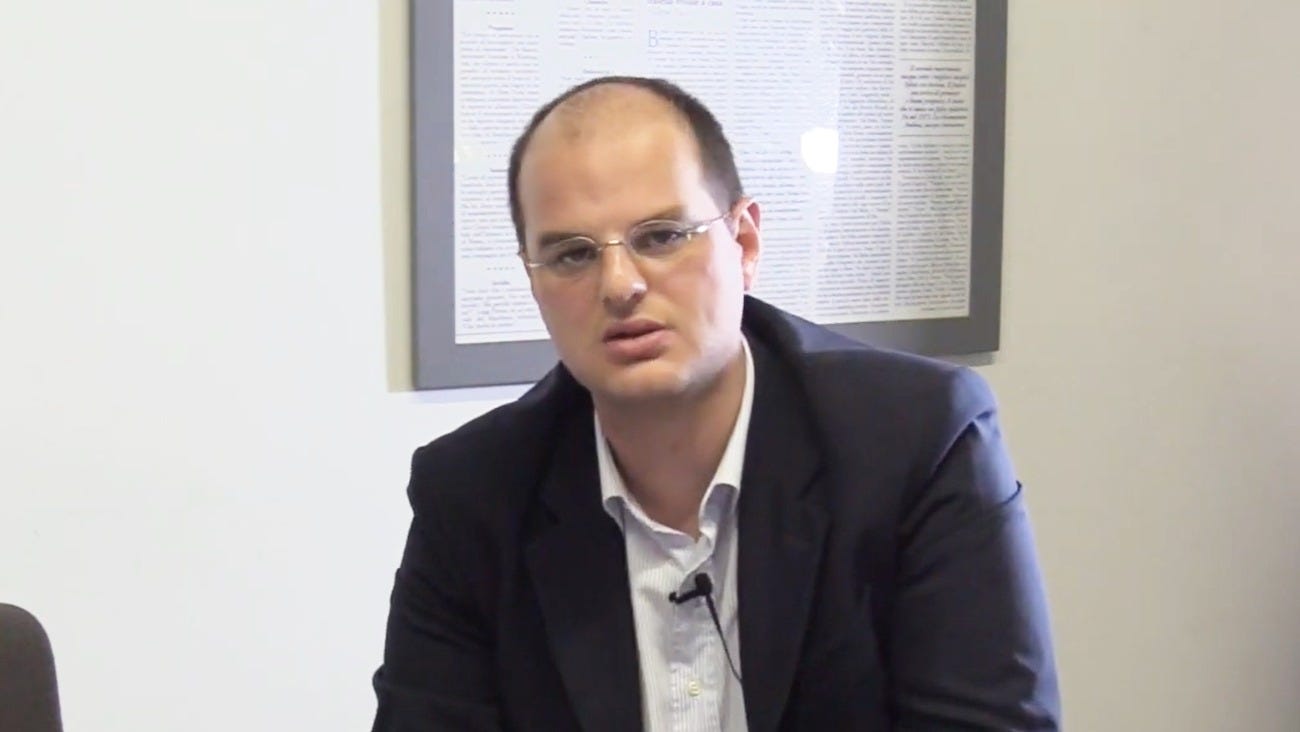
‘The West Is Not Being Conquered, It Is Vacating Everything It Built’
By: Grégoire Canlorbe The Gatestone Institute
Date: 2026-11-22 · Words: 1,470
Meotti argues Judeo-Christian values remain the West’s civilizational foundation despite academic denial.
He says biblical ideas shaped rights, law, accountability, and limits on arbitrary power.
Italy’s Roman and republican heritage advanced ordered liberty, but is now eroding.
He links secularization to demographic decline and Islam’s expansion across Western Europe.
He backs tighter migration controls, anti-Islamist vigilance, and an Israel-centered Western alliance.
This story shows how Meotti frames Western decline as a civilizational, demographic, and political retreat from its own foundations.
Skip the discussion — the article, or a short preview first:
Discussion
What gives the interview its force is the way it keeps turning civilizational language into institutional language. “Judeo-Christian values” is not left as a pious abstraction; it is translated into law, rights, accountability, citizenship, and the limits on arbitrary power. That move matters because it lets the argument avoid sounding like mere nostalgia. The claim is not that the West was morally pure, but that its deepest inheritance was a set of constraints on power that could survive bad rulers, religious conflict, and even secularization. The historical examples are chosen to make that continuity visible: Rome’s written law, the republics’ balancing of interests, the common-law and constitutional tradition, the later emancipation of Jews. The point is less that these societies were consistent than that they kept generating the standards by which they could be judged.
The demographic argument is built to make the same kind of transition from culture to mechanism. The interview does not treat Islam’s growth as a sudden ideological takeover; it presents it as what fills a vacuum when a society stops reproducing itself biologically and spiritually. That is why the language of “vacating” lands so hard at the end: it recasts decline as an act of withdrawal rather than conquest. The same pattern appears in the discussion of Italy. Rome and the city-states are not invoked as museum pieces but as evidence that a public order can be built, maintained, and then lost. The contrast between the old Italian habit of designing institutions and the present tolerance for parallel orders gives the piece its sharpest edge. Even the call for a Western alliance with Israel is framed less as a sentimental alignment than as a test of whether any shared civilizational core still exists that can be defended in practical terms.
🅱️ The ugly trick is that no army has to conquer a place that’s already stopped reproducing the habits that made it a place.
Last Time New York Tried Freezing Rents, It Went Up In Flames
By: Milton Ezrati The Federalist
Date: 2026-11-23 · Words: 1,347
Mamdani and DSA-backed rent freezes echo New York’s failed affordability experiments.
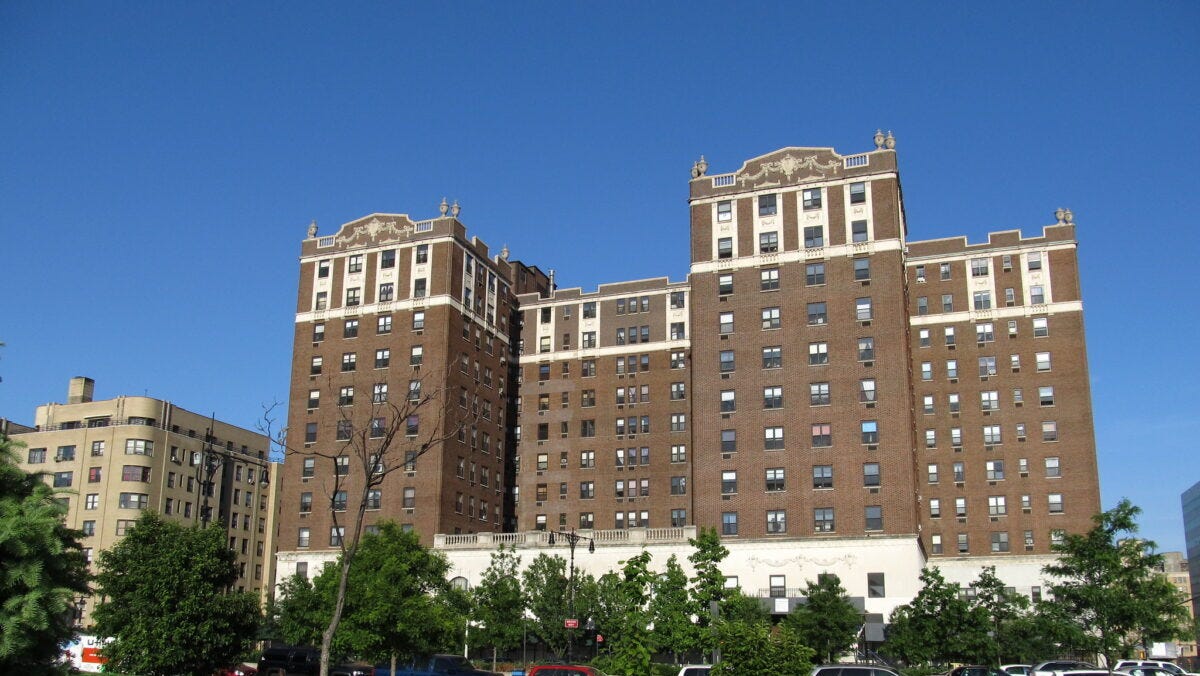
East Harlem’s failed foreclosure auction shows unprofitable rent-controlled buildings attract no buyers.
Past freezes raised maintenance strain, accelerated deterioration, and reduced rental housing supply.
The 1970s saw abandonment, arson, and over 200,000 lost rental units.
New freezes could again squeeze landlords, worsen tenant outcomes, and shrink housing.
This story shows rent freezes can backfire by making housing unprofitable, reducing supply, and harming tenants.
Skip the discussion — the article, or a short preview first:
Discussion
The East Harlem auction does a lot of work in a few lines. A building can be “bargain” priced and still attract no buyer if the income stream has been politically pinned down far enough. That is a cleaner economic signal than any abstract argument about incentives: the market is not refusing housing, it is refusing a liability dressed up as housing. The tenants’ uncertainty follows from that same fact. Once the asset cannot support itself, the people inside are no longer protected by the freeze so much as trapped by it.
The historical section is built around a slow tightening. First the freeze preserves existing tenants, then rising operating costs turn that preservation into a transfer of pain onto maintenance, then deterioration, then conversion, abandonment, and finally fire. The article’s strongest move is to show that the damage was not only to landlords’ balance sheets but to the housing stock itself. That matters because it changes the moral geometry of the policy: the visible beneficiary is the current tenant, but the hidden casualty is the next tenant, and then the neighborhood around them. The 1970s example is not just a cautionary tale about bad policy in the abstract; it is a demonstration of how a housing market can be pushed from scarcity into decay when the price mechanism is held below the cost of keeping the product alive.
There is also a quieter contrast running through the piece between the city’s present capacity and its old vulnerability. Better policing, better fire response, and tighter insurance screening mean the next round may not look like the Bronx burning. But that is not a reassurance so much as a narrowing of the damage. If the worst visible catastrophe is less likely, the more ordinary one becomes more likely: deferred maintenance, shrinking supply, forced turnover, and eventually public ownership of distressed buildings. The article leaves you with the sense that the policy’s modern version may be less dramatic than the 1970s, but not meaningfully kinder.
🅱️ A rent freeze can keep a tenant in place, sure, but if the building can’t pay its own way, the bill just comes due later in peeling paint, fewer apartments, and a neighborhood learning the difference between cheap and cheap-looking.
You may also be interested in the following selected stories:
Sunshine Is Free. Everything Else in California Is Expensive. — Jay Rogers, Townhall: A California tax critique argues that repeated levies on wealth, property, housing, and wages are driving residents and capital out of the state, while proposing reforms to sales taxes, CEQA deadlines, and revenue transparency.
Morning Greatness: Fossil Fuels for Me, a Lecture for You at COP31 — Liz Sheld, American Greatness: A commentary on COP31’s collapse in Antalya argues that climate leaders rely on fossil fuels while demanding others abandon them, and says energy policy should face the realities of global demand, reliability, and public health.
An Aesthetic Case Against the Left — Itxu Díaz, The American Spectator: A polemical essay argues that private property is aesthetically and morally preferable to socialism, using examples from housing, public offices, taxes, and squatting. It’s worth a click for its unusual framing of left-wing politics as a matter of vulgarity and bad taste.
Professor Yoo’s dissent — Scott Johnson, Power Line: John Yoo explains why he is leaving Berkeley Law for the University of Texas, arguing that campus antisemitism and hostility to Israel reflect a deeper rejection of Western civilization. The piece is worth a click for his account of Berkeley’s climate and his case for restoring great-books education.
Why Read Adam Smith? — The Freeman, thefreemanmag.substack.com: Adam Smith’s economics and moral psychology are explored as a guide to markets, trade, justice, and the social habits that make liberal society work. The essay explains why his ideas still matter for understanding prosperity and human behavior.
They Will Never Assimilate. They Will Take Over. That Is the Plan — Majid Rafizadeh, The Gatestone Institute: An argument that Islamist and Sharia-based identity resists assimilation and instead seeks to expand, using religious concepts like najis, apostasy, and marriage rules to explain why Western expectations of integration may fail.