


Rip’s Newsletter
November 2, 2026
DEEP RIP EDITION
Compiled and Edited
by
Jim Reynolds

Articles in This Issue
Victor Davis Hanson - Midterm Election Incoherences, Misadventures, and Paradoxes
Travis Lynch - Dems Run On Trump Hatred But Have No Vision For America
Ryan Walters - Teachers Are Paying for November Whether They Like It or Not
Jim Reynolds - Six Elections in Sedona
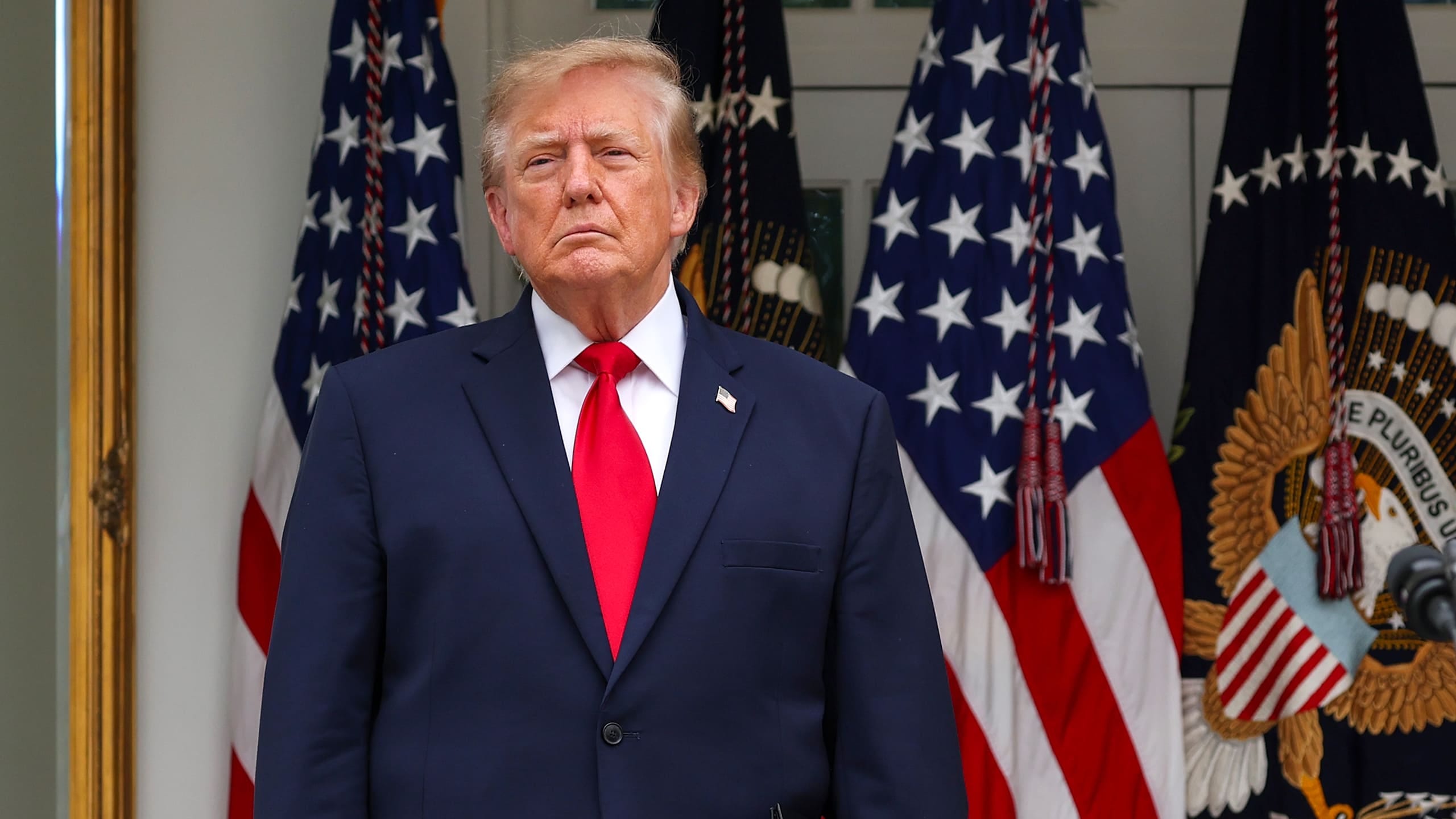
Midterm Election Incoherences, Misadventures, and Paradoxes
By: Victor Davis Hanson American Greatness
Date: 2026-11-02 · Words: 2,492
2026 economic conditions are better than 2022, yet media predict a Republican midterm collapse.
Hanson argues 2022’s Democratic resilience under worse conditions undermines today’s blue-wave certainty.
He says midterm losses rarely cripple presidents, citing Clinton and Obama surviving congressional setbacks.
Presidents can still govern through executive power, even with hostile or divided Congresses.
Close races, late surprises, and voter backlash against radical candidates could blunt expected wave effects.
This story shows how midterm predictions can misread voter behavior, presidential power, and electoral momentum.
Skip the discussion — the article, or a short preview first:
Discussion
The article’s real hinge is not the forecast itself but the way it keeps forcing the reader to compare one election cycle with another. The 2022-versus-2026 setup does more than supply context; it turns the midterms into a test of whether political memory is being used honestly. By lining up gas prices, inflation, GDP, and household income against the media’s current certainty, the piece makes the prediction problem look less like a matter of data than of selective recall. The same conditions that were supposed to produce a Republican wipeout in 2022 did not, and that fact quietly weakens the confidence of anyone now treating a Democratic surge as automatic.
The other revealing move is the long detour through Clinton and Obama. Those examples are not there simply to say presidents survive midterm losses; they show how much of modern presidential power has migrated away from Congress. Once that is visible, the usual midterm drama looks smaller. A hostile Congress can block appointments and legislation, but it does not necessarily stop a president from governing, especially in foreign affairs and through executive action. That is why the article keeps returning to the same paradox: a midterm loss can be politically real and still not be structurally decisive.
The late-campaign surprises and the references to radical candidates sharpen the same point from another angle. The piece suggests that voters do not always behave like pollsters or pundits assume; they compare the incumbent to the alternative at the last moment, and that comparison can blunt a wave. So the deeper claim is not merely that the blue wave may be overstated, but that wave language itself often hides how contingent these elections are. What looks like momentum from a distance can dissolve once voters are alone with the ballot and the choice becomes concrete.
🅱️ Midterms are where pundits go to worship momentum and voters show up with a receipt.


Dems Run On Trump Hatred But Have No Vision For America
By: Travis Lynch The Federalist
Date: 2026-11-02 · Words: 1,086
Democrats are campaigning on affordability and Trump’s Iran war, avoiding deeper national questions.
The article argues decades of globalization weakened communities, family stability, and local belonging.
China trade shocks and factory closures hollowed out industrial towns and civic life.
Progressive cultural politics, open borders, and anti-tradition schooling further eroded shared national identity.
A real America First agenda would prioritize borders, industrial renewal, and ending costly foreign wars.
This story shows how both parties helped hollow out national belonging, and why politics must refocus on home, community, and sovereignty.
Skip the discussion — the article, or a short preview first:
Discussion
The piece’s strongest move is the way it ties together factory closures, family instability, and civic thinning without treating them as separate policy failures. The plant shutdown is not just an economic event here; it becomes the hinge between a lost paycheck and a lost place in the world. That matters because it shifts the argument away from the usual accounting of wages and output and toward continuity: whether a family can remain where its history is rooted, whether a town can keep its institutions, whether citizenship still has a local texture. The article keeps returning to that idea in different registers, and the repetition is doing real work. It makes “belonging” feel less like a slogan than the name for a set of ordinary attachments that globalization and mobility quietly made optional.
The other revealing feature is how the argument assigns blame without flattening it. Democrats are criticized for turning America into a cosmopolitan project, but Republicans are not let off the hook for trade orthodoxy and foreign intervention. That gives the piece a useful internal symmetry: the same governing class that treated the country as a market also treated it as a platform for wars and abstractions. The result is a conservative argument that is less about partisan scorekeeping than about recovering a standard for politics itself. Trade, schools, borders, and war are all judged by the same question: do they preserve a people with a shared life, or do they leave only individuals moving through systems?
🅱️ When the plant closes, the town doesn’t just lose wages — it loses the scaffolding that kept a life from turning into a commute.

Teachers Are Paying for November Whether They Like It or Not
By: Ryan Walters Townhall
Date: 2026-10-31 · Words: 778
The article says November’s midterms will be the most expensive in U.S. history.
It argues teachers’ union dues are funding Democratic politics, not classroom representation.
NEA and AFT reportedly funneled over $1 billion into political causes since 2015.
Union filings show heavy spending on lobbying, donations, and leaders’ compensation.
The piece says Janus protects teachers, who can stop funding union politics.
This story shows how teachers’ union dues are being redirected into partisan spending, leadership perks, and electioneering instead of member representation.
Skip the discussion — the article, or a short preview first:
Discussion
The piece’s force comes from the accounting, not the rhetoric. It keeps returning to filings, dollar amounts, and percentages until the scale of the operation becomes hard to miss: the unions are not merely endorsing candidates, they are running a parallel political budget with dues money as the fuel. The most telling contrast is between what members are told they are buying and what the ledgers show they are buying instead. “Representation” is reduced to a minority share of spending, while the rest is dispersed across committees, outside groups, ballot fights, and leadership compensation. That ratio does more than accuse waste; it changes the meaning of union dues from a membership fee into a political levy with a labor wrapper.
The article also makes a subtler move by stacking national and local examples together. The NEA and AFT establish the system at the top, then Minnesota and Washington show that the pattern is not abstract or distant. That matters because it turns what could have been dismissed as a Washington story into something embedded in state politics and even retirement policy. The Weingarten book expense is the sharpest small detail in that sequence: it is not just that the unions spend on politics, but that the machinery extends to image-making, authorship, and personal brand-building, all under the same dues umbrella. The result is a picture of institutions that have become politically self-referential, with members financing both the message and the messengers.
🅱️ When “representation” is the minority line item and the rest is politics, branding, and perks, the dues start looking less like a membership fee and more like a toll.

Six Elections in Sedona
By: Jim Reynolds www.reynolds.com
Date: 2026-11-03 · Words: 1,574
Four friends have watched six U.S. elections together in Sedona since 2016.
The tradition has tracked triumphs, disappointments, and repeated expert forecasting failures.
2016 delivered Trump’s shocking win after polls and media favored Clinton.
2020 brought a prolonged count, Biden’s victory, and lasting election-night frustration.
The author says 2026 predictions favor Democrats, but warns against overconfidence.
This story shows how repeated election nights expose the limits of polling, prediction, and certainty.
Skip the discussion — the article, or a short preview first:
Discussion
The ChatGPT detour is doing more work than it first appears to. It is not just a comic travel anecdote; it becomes the article’s bridge from weather to politics, from a local road forecast to the larger habit of treating probabilistic systems as if they were settled knowledge. The joke lands because the machine is wrong in a way that feels almost embarrassingly concrete: it can sound authoritative about a flooded route that turns out to be fine. That small mismatch gives the later political point its force. Elections, like mountain roads in Arizona, are full of conditions that can be modeled, but not mastered.
That is why the piece keeps returning to the same pattern in different forms: confident prediction, then a result that is either narrower, messier, or simply different from what the experts had advertised. The article does not need to prove that polling is useless; it shows something subtler and more durable. Forecasts can be directionally useful and still leave the people who trust them too exposed to surprise. The repeated election nights in Sedona become a kind of informal education in humility, not because they reveal a hidden theory of politics, but because they show how often public certainty outruns the thing it claims to describe.
🅱️ Forecasts can be useful and still leave you standing in the dark with a drink in your hand, learning the same lesson every four years: certainty is cheap, surprise is not.
You may also be interested in the following selected stories:
Spending More, Teaching Less — Jay Rogers, Townhall: Public school spending has risen while test scores have fallen, and the essay argues that union politics and staffing growth have diverted money from instruction. It lays out the evidence and proposed fixes, from transparency on union spending to putting more dollars into classrooms.
There Is Nothing Progressive About Progressives — Daniel Winston, American Thinker: An argument that progressivism reverses modern gains in equality, speech, truth, economics, and biology, recasting old hierarchies and taboos in new language. It is worth a click for its sweeping critique of how contemporary left politics allegedly restores tribalism and inherited guilt.
The Weaponization Ledger Comes Due — Stu Cvrk, American Greatness: A conservative analysis argues that Democrats and allied media are denouncing “weaponization” only after years of supporting aggressive prosecutions of Trump allies, January 6 defendants, and other targets. It reviews recent cases, media reactions, and the broader pattern of selective outrage.
The Fight Over America’s Public History — Daniel McCarthy, Imprimis: Daniel McCarthy argues that America’s public history sites are battlegrounds over national identity, because museums and monuments do more than preserve facts—they shape moral understanding of the founding and the country’s meaning. He uses Washington, Lincoln, and the Revolution to show why the past still matters for how Americans see themselves.
Alaska’s Ballot-Stacking Scandal Demands A Grand Jury — Peter Navarro, peternavarro.substack.com: Peter Navarro argues that a New York Times report exposed a Democratic ballot-stacking scheme in Alaska involving a second “Dan Sullivan,” and calls for grand jury subpoenas, hearings, and criminal charges over the alleged effort to sway a Senate race.
Did ‘Decoy Dan’ Illegally Collude With Dem Dark-Money Group? — Alexander Lee, The Federalist: Alaska’s Senate race is examined for possible ballot-stacking and illegal coordination, focusing on “Decoy Dan,” a spoiler candidate, and a dark-money group that spent heavily against Sen. Dan Sullivan. It lays out the reported links, the ranked-choice voting confusion, and the federal election-law questions raised by a complaint.


I love this newsletter! It is one of the best conservative publications in existence.